

También podés leer la versión en castellano.
One evening over dinner, a friend told me something that stuck with me. The circumstances of our conversation are probably what made the comment more memorable. This friend wasn't really a friend of mine; he was a friend of who, at the time, was my recent ex-wife—who by now is my long-time ex-wife. Because he wasn't my friend, this was the first time we were meeting without my ex-wife as a chaperone. It was also the last time we’d see each other. It was in a restaurant, a goodbye dinner, because in a couple of weeks I was moving to a different city in a different country. We started talking about Life with a capital “L.” The big questions. I have no idea what comment I made, but judging by my friend's reaction, I must have said it with the confidence only young men have. He was silent for an instant, and then he pointed to a glass on the table and said: “You look at this and you don't see a glass filled with Coca-Cola—you’re looking beyond that." He was trying to say that I see the forest, not the tree, but because English wasn’t his first language, he didn’t know the expression.
Fifteen years later, I was spending one of those comforting evenings with my partner on the couch, chitchatting about this and that, when she told me something. It was the story of some young influencer who was going to Bogotá for a conference. Was it a conference? A TED Talk sounds more appropriate for an influencer. Again, I'm a beyond-the-glass kind of person; I don't linger on the details. The point, which I'm struggling to make, is that this person was presenting something, at some place, in Bogotá, on May 1st—International Labor Day.
In Bogotá, like in many other places in the world, Labor Day is a day when labor unions and workers take to the streets. Moving around the city is difficult, tensions are high, and often, riot police and protesters have a field trip. The influencer, unaware, posted something on social media. Again, I don't remember the details—maybe it was on Myspace. Her post was endearing and depressing. In the upbeat tone of an influencer, she said something like, “Hey guys! I hope to see you all May 1st. Unfortunately, there's some kind of protest going on. I have no clue what it's about, but I hope you can all can make it!” I'm paraphrasing here, and I imagine you can tell by the wording that I'd be a terrible influencer.
I looked at my partner with surprise. It was the reaction she was probably expecting. How could this influencer be so oblivious and unaware that May 1st is Labor Day, a day of struggle and of protest? An important day. A day that’s in history because, on a May 1st more than a century ago, unions took to the streets demanding an eight-hour workday. The original May 1st also got violent. Several members of the police and civilians were killed. We are commemorating the efforts of people who fought to make our lives better—at a time when protesting was a high-stakes game, with higher stakes than posting a tweet on X or whatever it is that influencers do.
At first, I was upset. My initial thought was: these are the people who are influencing us? People with no knowledge of our history, with a view of the present and future that is completely uninformed of the struggles of the past? But our gut reactions usually don't take us to the right conclusions. Once, my gut reaction was to propose to someone after knowing her for a month and a half. That ended up with me staring at a glass of Coca-Cola, saying good-bye to my ex-wife's best friend. After my initial surprise came understanding.
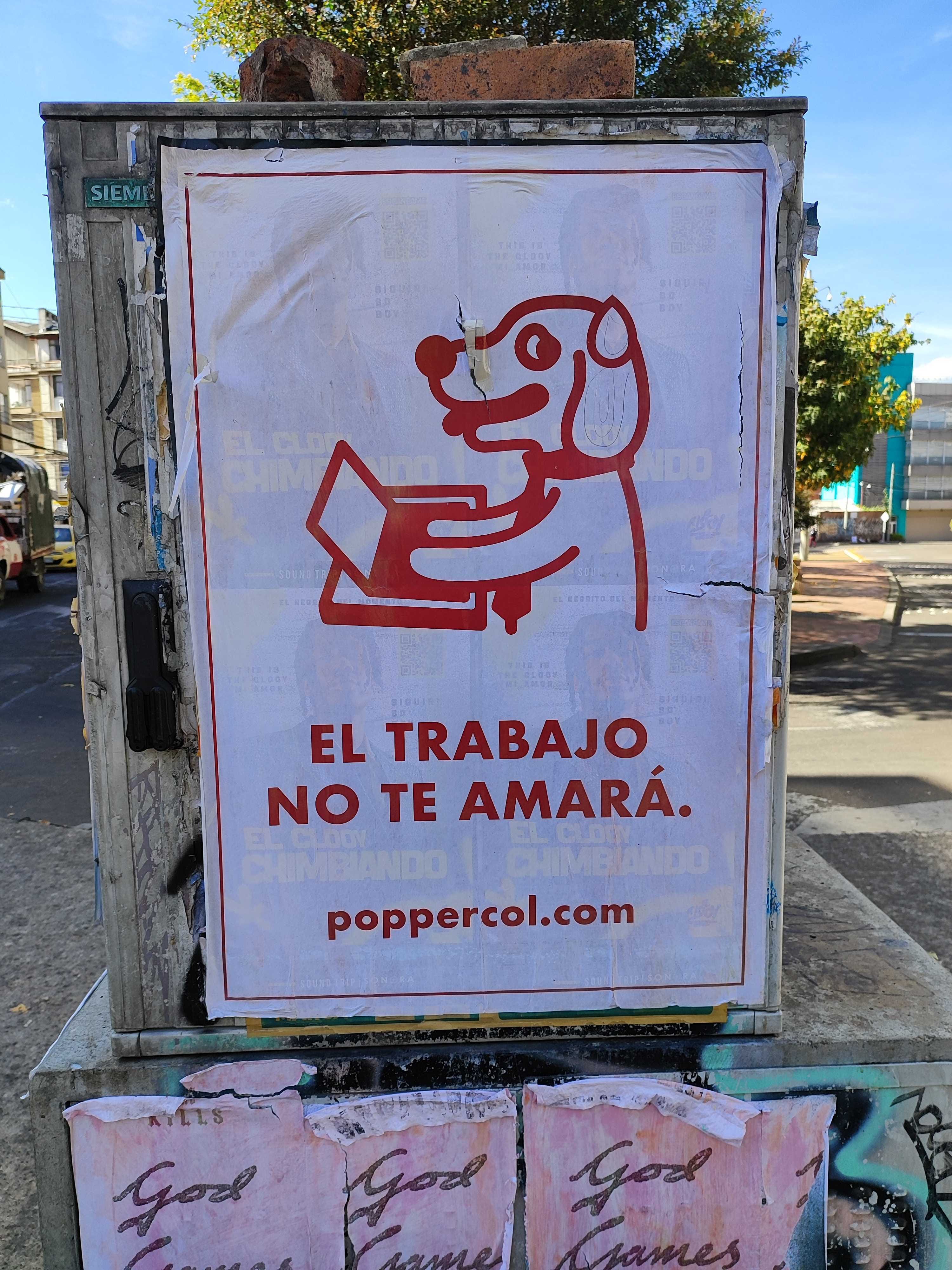
After all, what does the labor movement today mean to a person in their 20s? Most likely, they haven't ever thought of joining a union. They may not even know that unions exist, how they work, or that they can join them. Why join a union if I've already got Instagram, Facebook, LinkedIn, TikTok, and Snapchat? It wouldn’t surprise me if a kid today thought being on social media qualifies as being a socialist. And whatever they do know about unions can't be very good. They must seem like a bunch of old white men in their 50s and 60s, with their outdated wardrobes and dodgy deals with people in power. I even find it difficult to figure out what's to celebrate—an eight-hour workday? I was promised a utopia where machines would take care of the nasty business of managing human subsistence, and I’d live a life of contemplation and beauty. I guess I'll have to add that to the list of unfulfilled promises, together with hoverboards and flying cars.
Looking at it that way, being completely oblivious of Labor Day and the labor movement makes sense. Labor Day? Why celebrate work? Why celebrate something that is unnatural and instills values of competition and obsessive productivity? Often, people have to leave their families, homes, and dreams to find work. Is that worthy of celebration? Celebrating an alienating habit like work seems as ludicrous as celebrating alcoholism and drug abuse. That’s why it’s so important to stay in touch with younger people. Because they don’t really know that much of the past, their questions help us realize how that past has skewed how we understand the present. Labor Day? That’s a lost cause; I’d rather fight for leisure day.
For the 2025 Labor Day post, see:
